Ensuring Transparency and Integrity: A Call for Fairness in the Osun State University Alumni Elections Amidst Olokuta’s Candidacy

As the Osun State University Alumni gear up for their upcoming elections, a familiar name resurfaces in the midst of anticipation and excitement: Basit Olokuta. This election, however, is not just about choosing new leaders; it’s about upholding the values of transparency and integrity that define the essence of our alma mater.

Olokuta’s candidacy sparks a contentious debate among alumni, reminiscent of past controversies that have surrounded his involvement in the associations affairs. As a former General Secretary who was alleged to have used association funds in his account, originally intended for an association program and like others in his NEC may have only returned it when a petition was written to the Board of Trustees. Olokuta has challenged the Board of Trustees in court, his decision to run again raises valid concerns about his commitment to the principles of accountability and ethical leadership as his lawsuit has not exonerated him from the allegations in the petition till date.

But the issues at hand extend beyond Olokuta’s candidacy. The very process of the alumni elections is called into question, with allegations of disenfranchisement casting a shadow over the integrity of the electoral committee based on . Alumni who have dedicated themselves to the betterment of our alma mater find themselves sidelined, their voices muted in the democratic process they once helped shape.

In this moment of uncertainty, it is imperative that we, as alumni, reaffirm our commitment to the values that define us – integrity, transparency, and inclusivity. The decisions we make in these elections will not only shape the future of our alumni association but also reflect the character of our beloved university.

It is incumbent upon the electoral committee to address these concerns with the utmost urgency and diligence. The integrity of our alumni elections hangs in the balance, and any perception of bias or unfairness threatens to undermine the trust and confidence of the alumni community.

As we navigate these challenging times, let us remember the principles that have guided us throughout our journey as students and alumni of Osun State University. Let us demand accountability from our leaders, and let us ensure that every member of our alumni family is given a fair and equal opportunity to participate in the democratic process.

In the spirit of unity and solidarity, let us rise above the divisions that threaten to divide us and work together to build a brighter future for our alma mater. Our voices matter, our votes count, and together, we can ensure that the values we hold dear continue to shine bright at Osun State University.

Oriola’s Lawsuit and Its Ripple Effects: Examining the Credibility of the Osun State University Alumni Elections

As the Osun State University Alumni Elections draw near, the specter of controversy looms large over the candidacy of one individual: Oriola. With a pending lawsuit against the individuals acting as the Board of Trustees (BOT), Oriola’s journey to the elections has been fraught with legal battles and procedural hurdles.

The crux of the matter lies in Oriola’s lawsuit, which calls into question the legitimacy of the BOT and their actions. Despite rumors of reconciliation between the parties involved, a thorough investigation reveals that the lawsuit remains unresolved, casting a shadow of uncertainty over the electoral process.

Adding fuel to the fire, the electoral committee’s decision to disqualify Oriola raises eyebrows and fuels speculation about the motives behind such a move. The committee cites Oriola’s failure to submit an expression of interest revalidation form as grounds for disqualification, a decision that many view as arbitrary and unfair.

But beyond the intricacies of legal battles and procedural technicalities lies a more profound question: what does Oriola’s disqualification mean for the credibility of the Osun State University Alumni Elections?

At its core, the credibility of any electoral process hinges on the principles of fairness, transparency, and accountability. When candidates are disqualified under questionable circumstances, it erodes trust in the integrity of the electoral process and undermines the legitimacy of the outcomes.

The unresolved lawsuit adds another layer of complexity to an already contentious situation. While rumors of reconciliation may offer a glimmer of hope for a resolution, the fact remains that the lawsuit continues to linger, casting doubt on the legitimacy of the BOT and their actions.

In the face of these challenges, it is imperative that the electoral committee acts with transparency and fairness to uphold the credibility of the elections. Any perception of bias or favoritism only serves to further erode public trust and confidence in the process.

As alumni, we must remain vigilant and demand accountability from our electoral committee. Our alma mater deserves nothing less than a free, fair, and transparent electoral process that honors the principles of democracy and respects the rights of all candidates.

In the end, the credibility of the Osun State University Alumni Elections rests in the hands of its stakeholders. It is up to us to ensure that the integrity of our alma mater is upheld and that our voices are heard loud and clear in the halls of democracy.

UNIOSUN Appoints New Registrar, Bursar and Librarian

The Governing Council of Osun State University has announced the appointment of Mrs. Atinuke Abosede Oguntunde as the institution’s 3rd substantive Registrar, Mr. Muideen Akintayo Lasisi as the 3rd Substantive Bursar, and Dr. Olugbenga Wale Adewuyi as the 3rd Substantive University Librarian.

Read More

Opinion: Osun State University Alumni association 2024 elections.

Yesterday the electoral commitee of the UNIOSUN Alumni association released the list of candidates and other important information about the election:

The document reveals more than 200 alumni are likely to decide the fate of the 15 candidates running for various positions. A number of positions have no candidates. This 27th of April, 2024 election is a continuation of the postponed election.
Further it reveals that one of the four presidential candidate, Oriola Oladipupo, the former president, will not be contesting for a second term anymore as has not shown interest in paticipating in the rescheduled election.

Following this, two major camps have emerged, the revitilisation group and the emancipation group.
A choice between “Revitalization” and “Emancipation” seems to encapsulate two different visions for the future of UNIOSUN (Osun State University) and its alumni community. “Revitalization” suggests a focus on rejuvenating and strengthening the institution, possibly through reforms, innovation, and investment in various areas such as academics, infrastructure, and alumni engagement. On the other hand, “Emancipation” implies a desire for liberation, perhaps from perceived constraints, limitations, or past practices that may have hindered progress or stifled the full potential of the university and its alumni.

The outcome of this election will likely depend on how these concepts are interpreted by the alumni and which vision resonates more strongly with their aspirations for the university’s future. It reflects a pivotal moment for the UNIOSUN community to shape the direction of the institution and chart a course that aligns with its values, goals, and ambitions. Are the electorates looking to be free from a perceived bondage or are they to look forword to a future better than the present? The choice is in the hands of the voters.

The revitilisation group has presented its 16 point agenda and the presidential manifesto of Engr. Olasupo Bashorun.

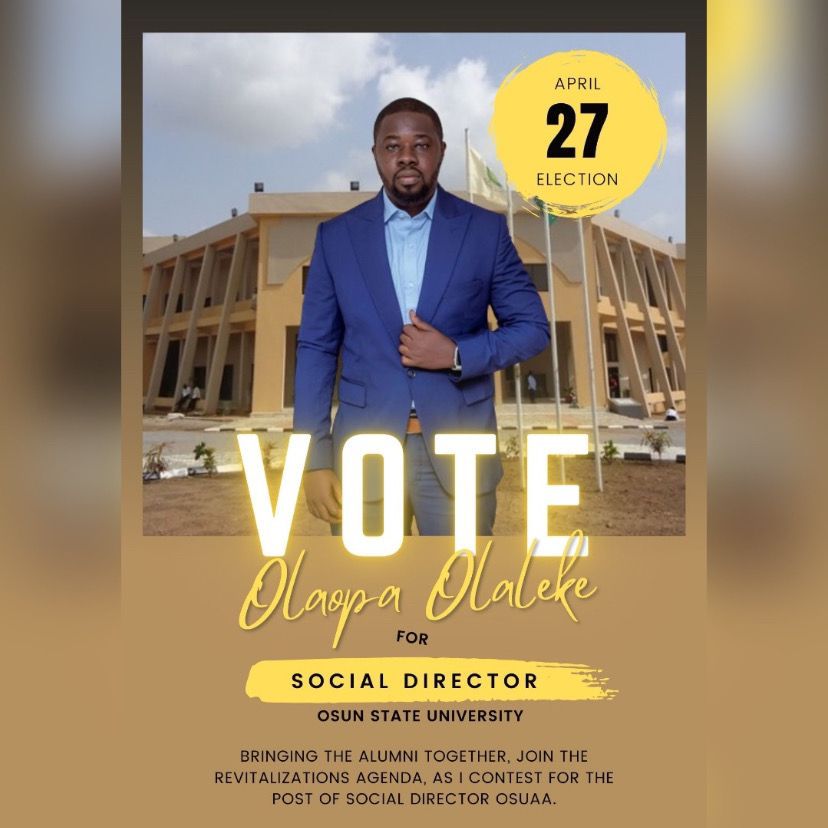
Other candidates in the group are Olaopa Olaleke who is running for the position of National Social Director and teslim Kudomi running for the position of National Treasurer.


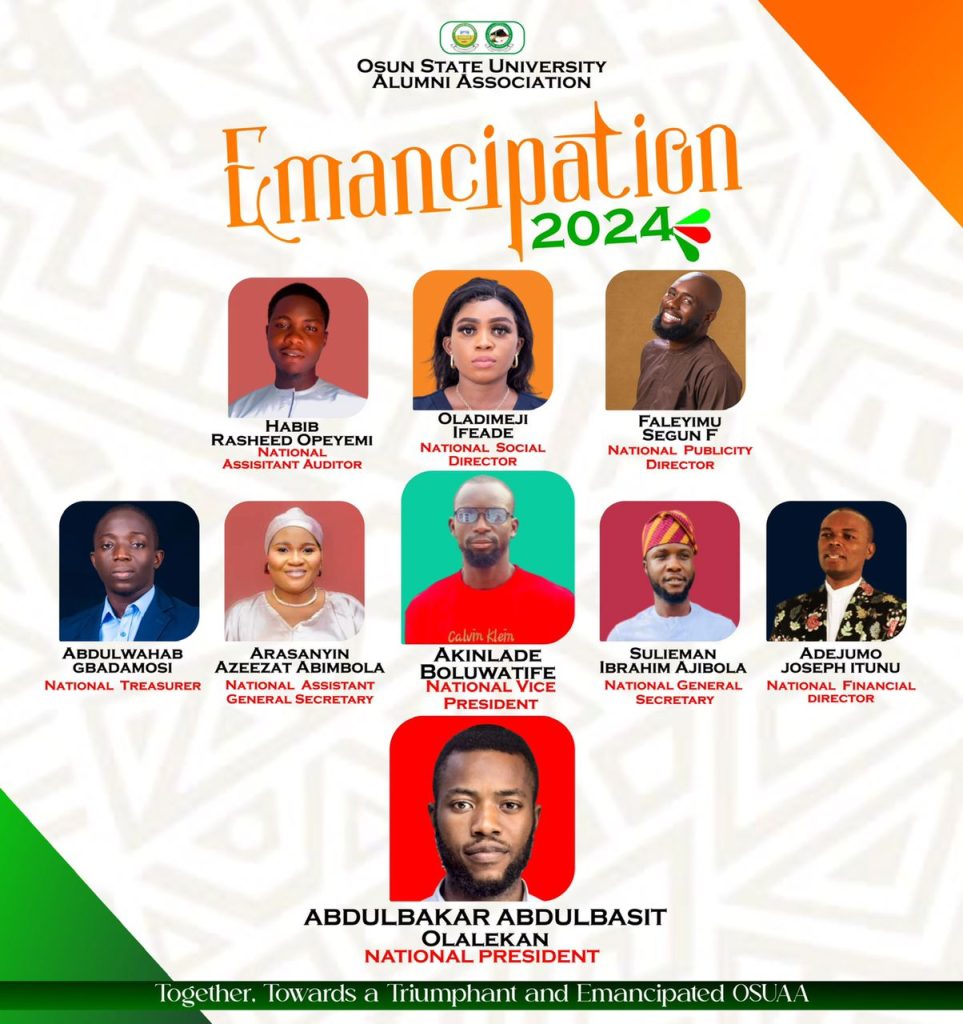
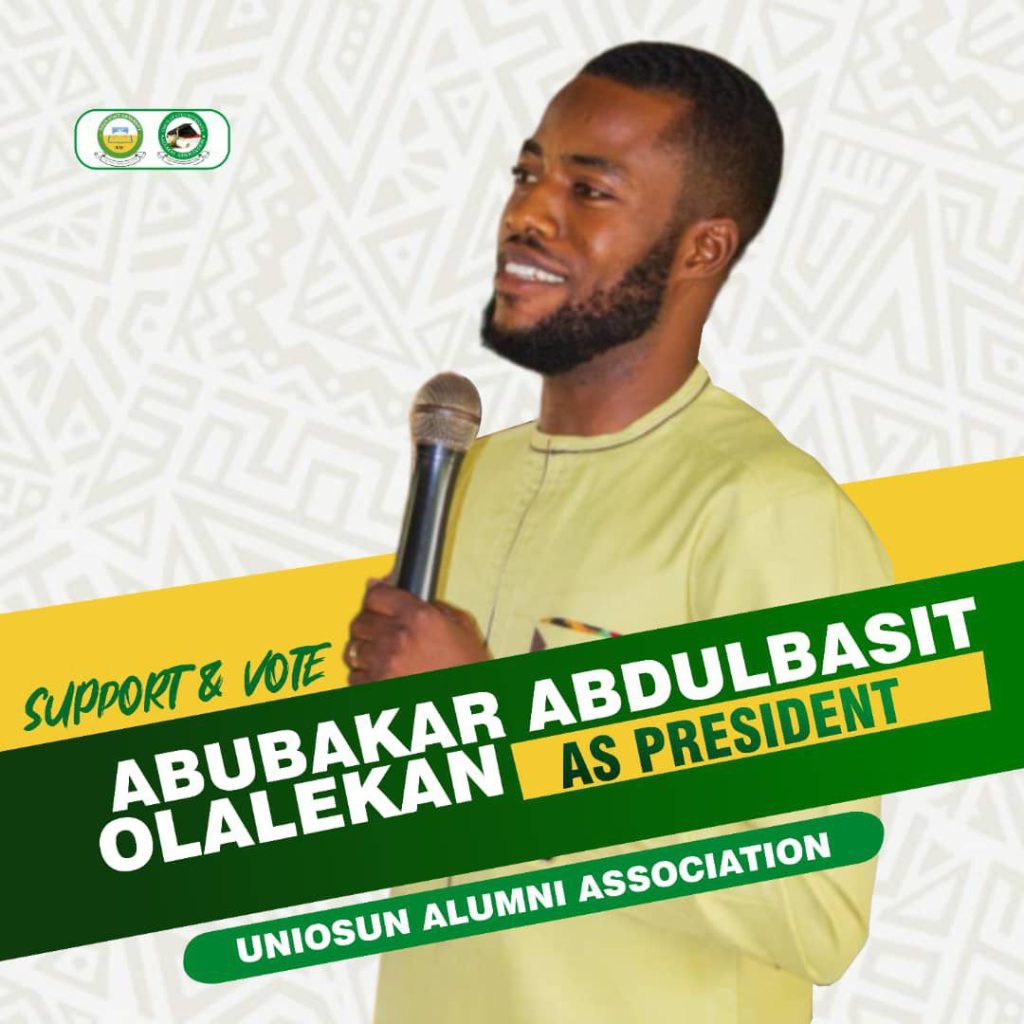
The emancipation group lead by Basit Olokuta has declared a united front

their manifesto is below:


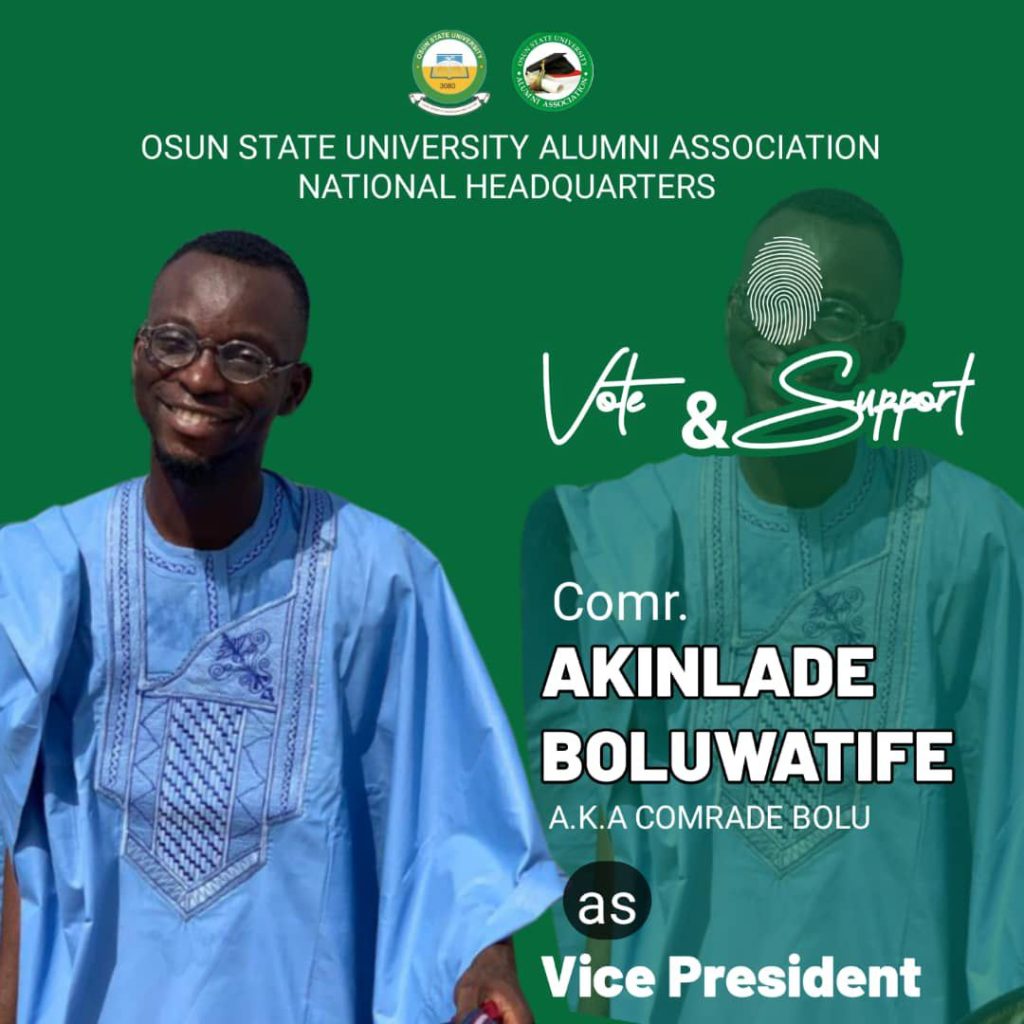
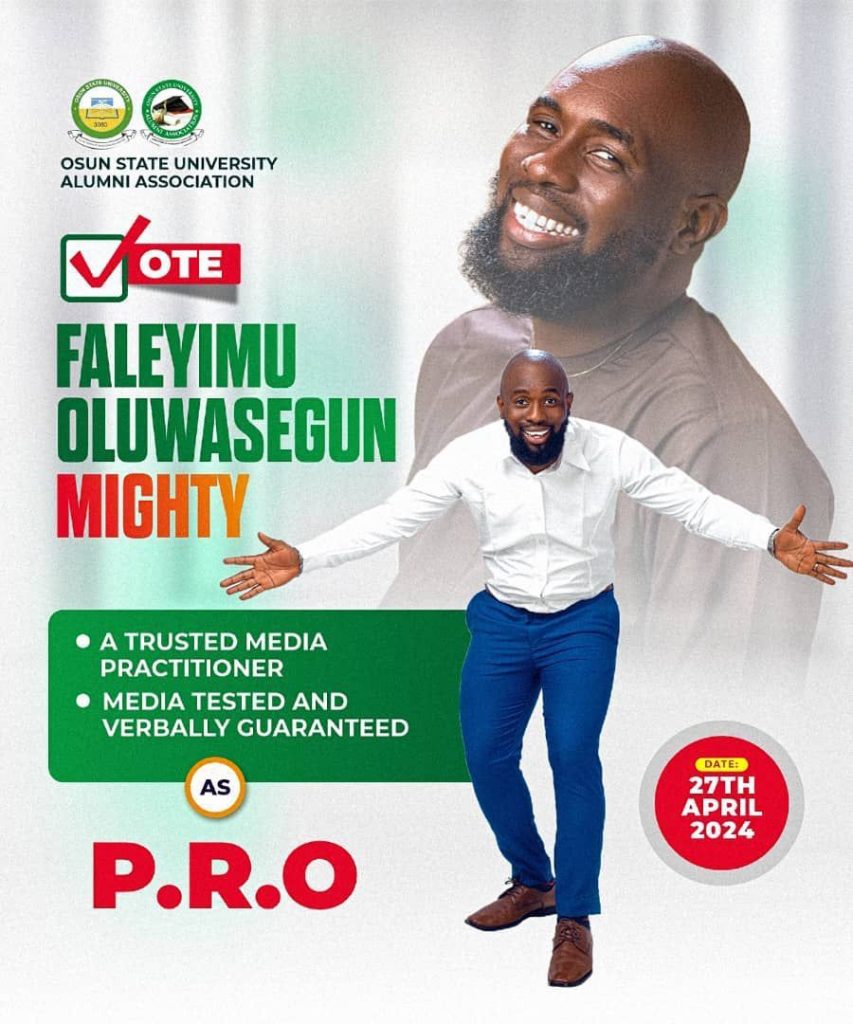
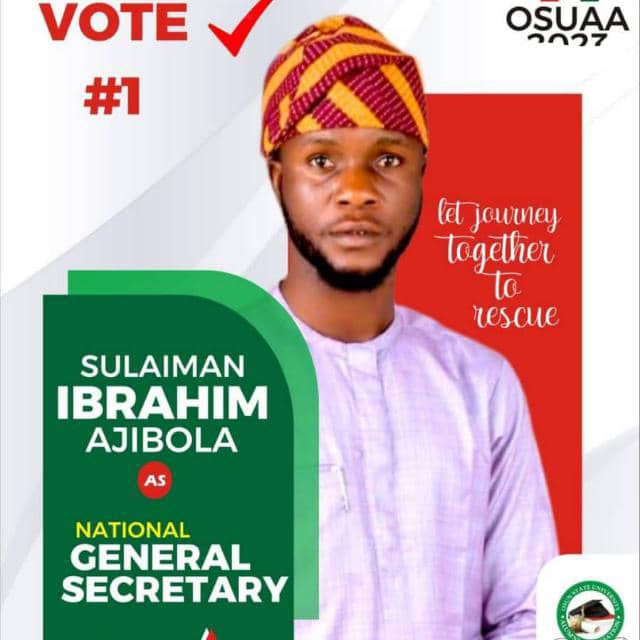
Other emancipation candiate fliers


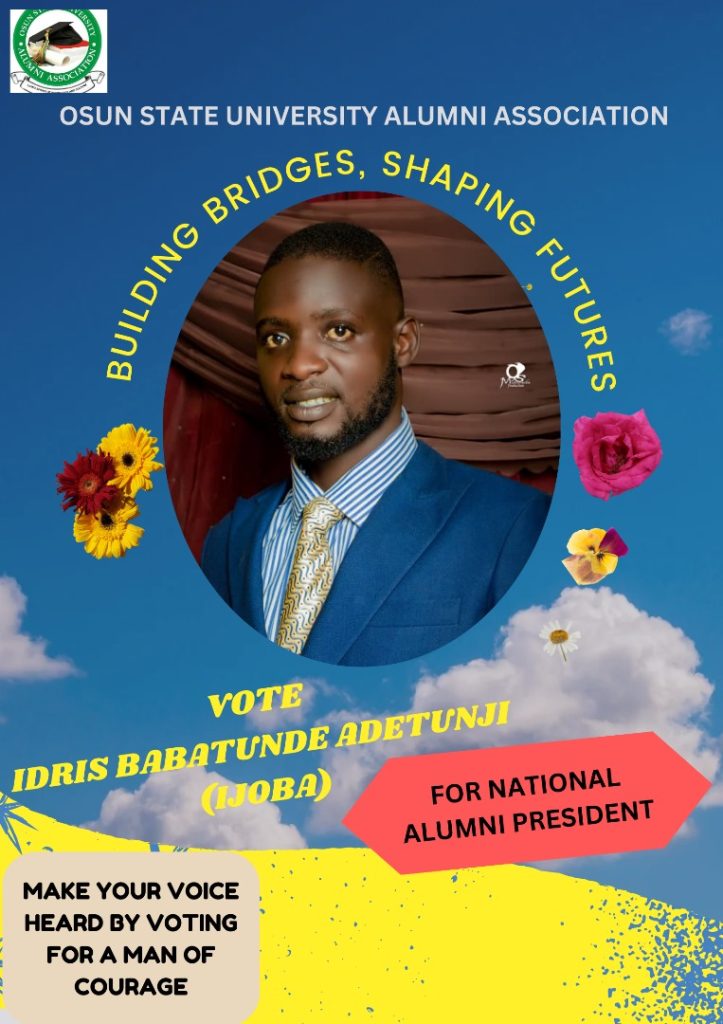
Not to be left out there is a third camp led by Idris Babatunde Adetunji also known as Ijoba

Osun State Government Refutes Allegations of Governor’s Involvement in Chief Judge Suspension over allegations of misappropriation.

In the aftermath of the suspension of Osun State Chief Judge, Justice Oyebola Ojo, the state government has categorically denied allegations that Governor Ademola Adeleke was responsible for the decision. The government, through the Commissioner for Information and Public Enlightenment, Kolapo Alimi, released a statement on Friday refuting claims that the Governor had suspended Justice Ojo.

The suspension came on Thursday, November 16, with the appointment of Justice Yinka Afolabi to act in the capacity of Chief Judge pending the completion of an investigation by the Osun State House of Assembly. Earlier reports had suggested that Justice Ojo sought a restraining order from the National Industrial Court (NIC) in Ibadan, but the government maintains that the petition and preliminary actions have been forwarded to the National Judicial Council (NJC).

According to Alimi, Governor Adeleke has not defied any court order, emphasizing that the State House of Assembly, which confirmed Justice Ojo’s appointment, is not party to any ongoing legal proceedings. Alimi clarified, “The Governor only acted on the resolution of the House. To ensure there is no vacuum, the Governor appointed an Acting Chief Judge, as prescribed by the Constitution in a situation like this.”

The Commissioner further explained that the State Assembly, recognizing the need for an impartial investigation, requested the Chief Judge to step aside during the inquiry. Alimi stated, “It is therefore the responsibility of the State Assembly to inform the public, NJC, and the Governor about its findings, on the conclusion of its investigation, and also make resolutions on the next line of action.”

He also addressed the misrepresentation in some sections of the media, asserting, “We want to put it on record that the Governor is a law-abiding person and will not do anything to compromise the rule of law. Whenever the court processes are served on the persons listed as Defendants in the alleged suit (if any), they would take appropriate steps to react.”

Governor Adeleke appoints new UNIOSUN Board members

In a significant development for education and governance in Osun State, Governor Ademola Adeleke has announced the appointment of new members to the governing council of the prestigious Osun State University (UNIOSUN). This decision, which comes as part of a broader initiative to appoint members to non-statutory boards across the state, carries profound implications for the future of the institution and the state’s educational landscape.

UNIOSUN, founded in 2006, has steadily grown to become a center of academic excellence and a hub for research and innovation in the region. With a focus on providing quality education and promoting research, the university has played a pivotal role in fostering intellectual growth and contributing to the state’s development. The appointment of new governing council members underscores the commitment of the state government to the advancement of the institution and, by extension, the education sector.

The newly appointed members to the governing council of UNIOSUN include distinguished individuals with a wide range of expertise, experiences, and backgrounds. Their wealth of knowledge and skills will undoubtedly serve as an asset to the institution, as they oversee its policies, administration, and strategic direction.

  1. Gbadeshin Lawal
  2. Prof. David Oladeji
  3. Tunji Omole
  4. Olawale Oludayo
  5. Hassan Adegoke
  6. Prof. Aworemi
  7. Dr. Kamoru Kadiri

The newly appointed council members will play a critical role in overseeing UNIOSUN’s strategic decisions, financial management, and academic policies. They will work in tandem with the university administration to ensure that the institution continues to provide quality education, foster research, and nurture the intellectual growth of its students.

The importance of this appointment extends beyond the university’s campus. It represents a broader commitment to advancing education and promoting the state’s development. Osun State has a strong tradition of investing in education, and the appointment of dedicated and experienced individuals to the UNIOSUN governing council underscores the government’s commitment to further strengthening the education sector.

Governor Adeleke’s charge to the new appointees to strictly adhere to the rule of law, due process, and procurement laws demonstrates the government’s dedication to transparency and accountability in governance. By ensuring that the council operates within these parameters, the state aims to enhance the institution’s reputation and integrity.

As Osun State University moves forward under the leadership of its newly appointed governing council, the institution is poised to continue its trajectory of excellence in academics, research, and community engagement. With these distinguished individuals at the helm, UNIOSUN is on track to remain a beacon of knowledge and a catalyst for the state’s development.

Court declares suspension of OSUAA NEC unconstitutional, awards ₦3m damages.

The Osun State High Court in Osogbo has ruled that the suspension of the National Executive Council (NEC) of Osun State University, Osogbo, by the Board of Trustees (BoT) is invalid. Justice M. O. Awe delivered this judgment, stating that the BoT’s actions were in violation of the association’s constitution.

The case was brought before the court by two NEC members, Basit Abubakar, who served as the General Secretary, and Tobi Oyesowo, the legal adviser. They challenged the BoT’s decision to suspend the entire NEC over allegations of gross misconduct.

In the judgment, Justice Awe not only declared the suspension of the plaintiffs as members of the UNIOSUN Alumni Association’s NEC by the BoT as ultra vires, null, and void but also issued an order to set aside the suspension. The suspension had occurred before the expiration of the plaintiffs’ tenure of office, which was set to end on May 28, 2023.

Furthermore, the court awarded damages in the amount of three million Naira, with each plaintiff receiving 1.5 million Naira in compensation from the defendants.

In summary, the court found that the BoT’s suspension of the NEC members was unlawful due to its violation of the association’s constitution and ordered the reversal of the suspension. Additionally, damages were awarded to the plaintiffs as compensation for the harm caused by the suspension.

Osun State University Among 12 Institutions to Benefit from $15 Million Solar Energy Project

In a promising development for the Nigerian education sector, a significant initiative involving the provision of solar-powered energy has been set in motion. This ambitious project, backed by the reputable South Korean firm, Blue Mountain Energy (BME), is poised to make a lasting impact on the country’s higher education institutions.

On Thursday, October 12, 2023, the CEO of Blue Mountain Energy (BME) Korea, Mr. Jung Cookjin, and the Executive Director of SDG Youth International, Mr. Kim Ju Yong, touched down in Nigeria for a 5-day working visit. Their primary objective during this visit was to conduct an on-the-spot assessment of a select group of 12 higher education institutions earmarked to benefit from the BME-Saudi Exim Bank Solar Energy Project.

The BME-Saudi Exim Bank Solar Energy Project is part of the Overseas Development Assistance (ODA) provided by the Saudi-Exim Bank. This collaborative effort is a five-year endeavor with an impressive financial commitment of $15 million per year. It aims to bring solar energy to various sectors of Nigeria’s economy, starting with the allocation of 100KVA solar energy to the 12 higher institutions situated across the six geopolitical regions of Nigeria.

The project is poised to kick off in earnest with the pilot phase, set to commence in February 2024. During this initial stage, Osun State University, Osogbo, and the Federal University of Agriculture in Kebbi State will be the first beneficiaries. Installation of solar energy infrastructure in the remaining 10 institutions will be executed in a phased manner, spanning from February to October 2024.

Uzoh Ifeanyi, the Country Representative for Nigeria and the African Region, took the opportunity to share crucial details about the project during a press briefing in Abuja. He revealed that the second phase of this commendable endeavor will extend to public primary and secondary schools in local government areas throughout the country, starting in Mokwa Local Government Area of Niger State.

This ambitious project is poised to bring a multitude of benefits to Nigeria. Not only will it secure a reliable energy source for the designated institutions, but it will also pave the way for the establishment of a solar power plant within the nation’s borders. This initiative is set to create employment opportunities for the nation’s youth, and it will introduce a solar engineering course into Nigerian universities, facilitating the education of future experts in solar technology.

Furthermore, the project promises to offer automatic employment prospects to graduates specializing in BME Solar Engineering. They will find opportunities not only within BME Korea but also in BME Saudi Arabia and other esteemed solar technology companies operating overseas. This commitment to fostering renewable energy infrastructure and expertise is a promising step towards a more sustainable and energy-efficient future for Nigeria.